LoHi vs. Highlands vs. Sunnyside: Denver’s Neighborhoods, Explained
Jason Cummings November 16, 2026
Jason Cummings November 16, 2026
These three names get used loosely, sometimes interchangeably, in everyday conversation and even in some listings. In reality, they’re three distinct areas with real differences in boundaries, housing stock, price point, and day-to-day feel. Here’s an accurate breakdown.
Where Each One Actually Starts and Ends
Denver’s official city maps register the entire area south of West 38th Avenue as “Highland,” but in local practice and real estate marketing, that area splits into two distinct sections. LoHi, short for Lower Highland, runs from West 38th Avenue south to Speer Boulevard, bounded by I-25 and the South Platte River to the east and Zuni Street to the west, occupying the lower-elevation eastern slope closest to downtown. Highland itself, often called Highland Square or West Highland, sits on the higher interior plateau to the west of Zuni Street, extending toward Federal Boulevard and beyond.
Sunnyside is a fully separate, independently defined neighborhood sitting directly north across West 38th Avenue, running up to I-70, bounded by the railroad corridor to the east and Federal Boulevard to the west. It’s genuinely its own neighborhood, not a sub-section of Highland the way LoHi technically is.
What You’ll Actually Pay in Each
LoHi commands a real premium. Single-family homes run $1.1 million to $2.5 million or more, since buildable lots are scarce, while condos and townhomes, largely mid-rise luxury buildings and modern vertical townhomes, run $500,000 to $1.2 million-plus. Highland is more moderate: single-family homes, mostly historic Victorians and craftsman bungalows, run $850,000 to $1.8 million, with duplexes and smaller condos from $450,000 to $850,000. Sunnyside is the most accessible of the three, single-family homes, often renovated bungalows or new pop-tops, run $700,000 to $1.3 million, with a growing townhome inventory from $420,000 to $700,000.
Three Genuinely Different Architectural Identities
LoHi leans hard into contemporary, high-density infill, three-story modern townhomes with rooftop decks, glass-and-steel mixed-use buildings, and loft conversions, with just a scattering of historic Victorians remaining among the newer construction. Highland is the opposite: dominated by late Victorian homes, brick Queen Annes, craftsman bungalows, and Tudor revivals, with historic overlay districts like Potter Highland actively protecting that character. Sunnyside sits in between, classic 1920s-to-40s brick craftsman bungalows and ranch homes mixed with an active wave of pop-top renovations and modern slot-home infill.
Walkability Looks Different in Each
LoHi is extremely walkable, with a Walk Score around 88 to 92, centered on 32nd and Tejon and the 16th Street corridor near Little Man Ice Cream, an energetic, trend-driven commercial scene built around rooftop bars and destination dining. Highland is still highly walkable, 75 to 82, but centers on a more neighborhood-oriented cluster at 32nd and Lowell, bakeries, bookshops, and family-run bistros rather than nightlife. Sunnyside runs moderate to high, 68 to 75, highly walkable in pockets along West 44th Avenue and Tejon Street, but more car-dependent toward its northern edge near I-70.
School Assignments Overlap More Than Boundaries Suggest
All three areas feed into Denver Public Schools, and Skinner Middle School and North High School serve all three at the secondary level. Elementary options differ: LoHi draws from Bryant-Webster and Sandoval, Highland from Brown International Academy and Edison, and Sunnyside from Trevista at Horace Mann and Valdez Elementary’s dual-language immersion program.
Getting Downtown Takes Minutes, Not Boundaries Being Equal
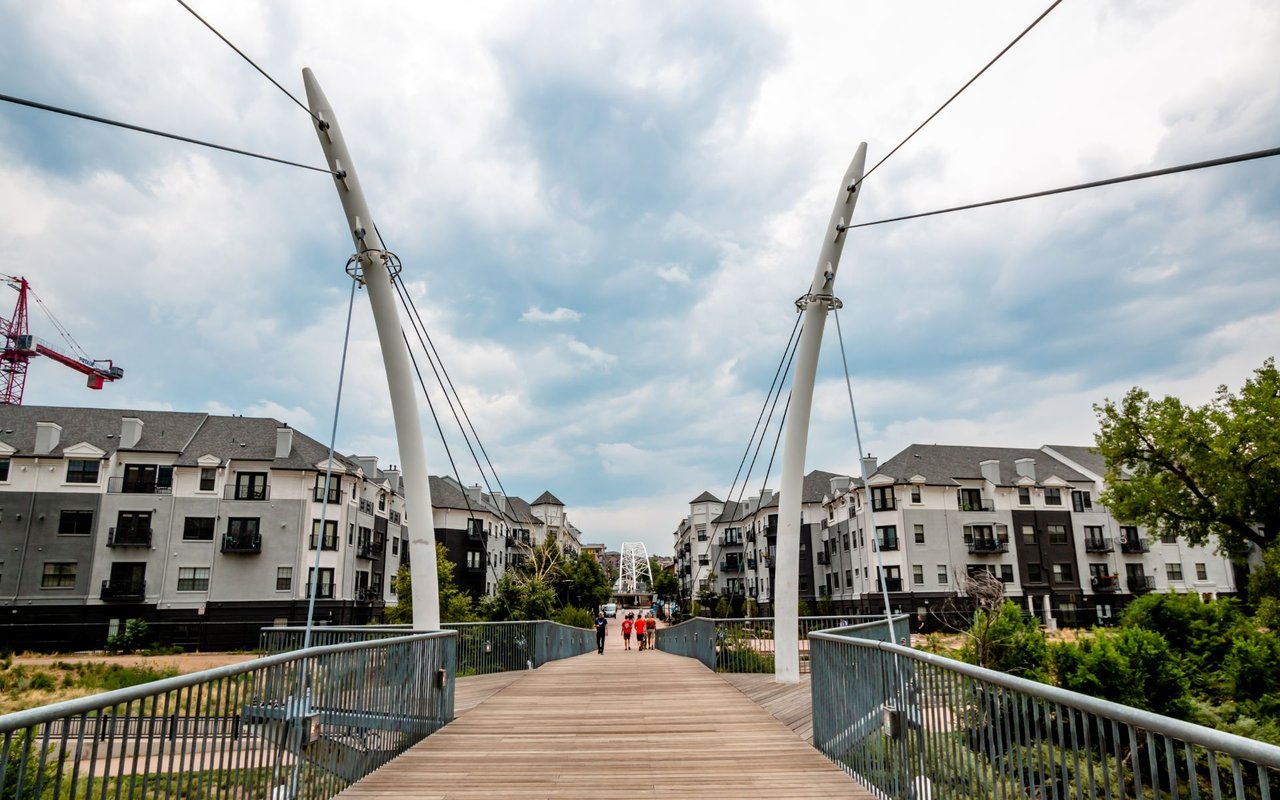
LoHi is genuinely closest, 3 to 7 minutes by car, or a 10-to-15-minute walk across the Highland Bridge straight into Union Station. Highland takes 7 to 12 minutes by car down Speer or 32nd. Sunnyside runs 10 to 15 minutes by car, but also has direct commuter rail access via the 41st and Fox Station, a 5-minute train ride to Union Station on the RTD B and G lines.
Three Different Reasons to Choose Each One
LoHi functions almost like an extension of downtown itself, sleek, social, and fast-paced, built for people who want rooftop bars and food halls within walking distance. Highland keeps a genuine “small neighborhood inside the city” feel, block parties, farmers markets, historic charm, balanced against real walkable convenience. Sunnyside is the most unpretentious of the three, trading rooftop lounges for brewery patios and yard space, with a grounded, still-emerging character.
Who Actually Ends Up Buying in Each
LoHi tends to draw young executives, tech and finance professionals, and dual-income buyers without kids who want low-maintenance luxury close to downtown. Highland attracts move-up buyers and young families drawn to strong neighborhood schools and historic character, without giving up walkability. Sunnyside appeals most to first- and second-time buyers and young families looking for detached homes under $1 million, often priced out of Highland or LoHi, with the added draw of commuter rail access.
What’s Actually Happening in Each Market Right Now
LoHi’s activity centers on luxury condo and townhome resales and boutique infill, commanding some of the highest price-per-square-foot sales in North Denver. Highland is seeing strong demand for high-end renovations that preserve original Victorian and bungalow details while adding modern, open-concept space, alongside new luxury duplex infill along commercial edges. Sunnyside is actively transforming around the West 44th Avenue corridor and the 41st and Fox transit hub, with bungalow pop-tops and modern slot homes drawing buyers priced out of its two neighbors.
Frequently Asked Questions About LoHi, Highland, and Sunnyside
Is LoHi part of Highland, or its own neighborhood?
Technically, Denver’s official maps register LoHi as part of the broader Highland area, but in local practice and real estate marketing, it functions as its own distinct area with a different feel and price point.
Which of the three is most affordable?
Sunnyside, with single-family homes typically starting around $700,000, compared to Highland’s $850,000 starting point and LoHi’s $1.1 million.
Which neighborhood has the best transit access to downtown?
LoHi is closest by car or on foot across the Highland Bridge, but Sunnyside has a genuine advantage with direct commuter rail access via the 41st and Fox Station, a 5-minute ride to Union Station.
Close on a Map, Different in Practice
LoHi, Highland, and Sunnyside sit within a few minutes of each other, but they genuinely offer three different ways of living in North Denver: urban energy, established neighborhood charm, or grounded, emerging character. The right fit comes down to budget, architecture preference, and how much nightlife versus quiet you actually want outside your front door.
Trying to figure out which of these three actually fits what you’re looking for? Let’s walk through the specifics together.
Stay up to date on the latest real estate trends.
November 16, 2026
November 13, 2026
November 12, 2026
November 12, 2026
November 11, 2026

November 10, 2026
November 9, 2026
November 6, 2026
November 5, 2026
DENVER'S TRUSTED REAL ESTATE ADVISORS
The team combines expertise with a willingness to think outside the box and break the mold to stay on the cutting edge of a shifting real estate industry. Whether you’re thinking about listing a house, beginning your search for a new home, or have a question about the area, please feel free to contact us.